Welcome to the place of wisdom
Quantum survival: when reality fractures and consciousness continues
There are moments in reality so statistically improbable that they begin to feel less like accidents and more like ruptures in the architecture of existence itself. Events so extreme that science alone explains the mechanics, but philosophy must confront the meaning.
On July 13, 1978, in Protvino, USSR, physicist Anatoli Bugorski leaned over malfunctioning equipment inside the U-70 synchrotron, then the largest particle accelerator in Soviet science. Due to a catastrophic chain of failures, an active proton beam was not shut down. In a fraction of a second, a beam of particles moving near the speed of light entered through the back of his skull, passed directly through his brain, and exited through his face.
In that instant, Bugorski later described seeing a flash “brighter than a thousand suns.”
For those who understand symbolism, this phrase carries enormous weight. It echoes Oppenheimer’s famous reflection during the Trinity test, itself borrowed from the Bhagavad Gita, where Krishna reveals his divine form. Bugorski, a nuclear physicist, understood the gravity of such language. He was not simply describing brightness. He was describing recognition. An encounter with something so far beyond ordinary human thresholds that the event itself becomes mythic.
By every known medical standard, Bugorski should have died instantly. The radiation dose was far beyond lethal. Yet he survived.
Not only did he survive, but astonishingly, he completed his work, went home, and initially told no one. Only later did the physical consequences emerge: swelling, burns, neurological damage, facial paralysis. Doctors expected death within weeks. Instead, he lived.
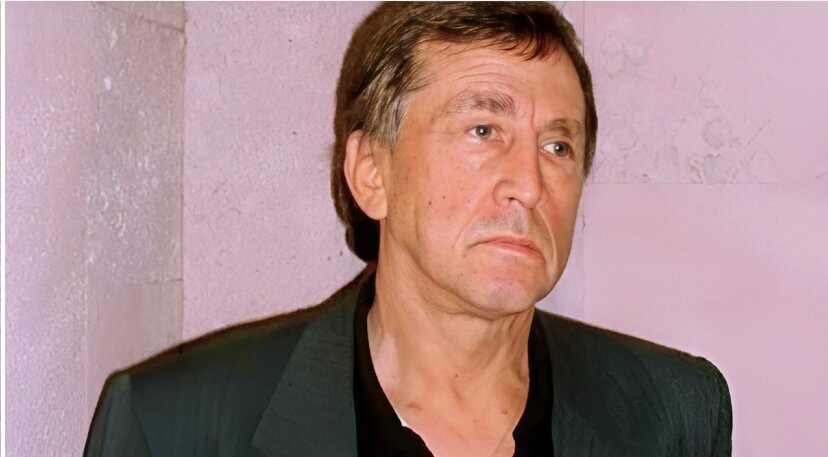
But survival of that magnitude does not leave a person untouched. The left side of his face remained permanently paralyzed. His hearing was severely damaged. More strangely, over decades, observers noted that the two halves of his face appeared to age differently, as though one side remained anchored to ordinary biological time while the other had passed through something reality itself could barely contain.
His body became more than injured. It became symbolic. Bugorski’s survival reads almost like a living koan for the Many-Worlds interpretation of quantum mechanics. In Everett’s framework, reality continuously branches into countless outcomes. Every quantum event produces divergent possibilities. In nearly incomprehensible numbers of those branches, Bugorski died on July 13, 1978. Routine industrial death. Scientific tragedy. End of story.
But we do not inhabit one of those branches. We exist in the branch where he survived, however unlikely that survival may have been. And this raises a deeply unsettling philosophical question: from the subjective perspective of consciousness, is awareness only ever experienced along branches where it continues?
This is the disturbing essence of quantum immortality. Consciousness never experiences its own absence. It only perceives the pathways, however statistically improbable, in which survival persists.
Suddenly, Bugorski’s story transforms from medical anomaly into something far larger. He becomes an accidental demonstration of one of the most terrifying and fascinating implications of modern physics: that the continuity of self may not follow probability in the way we emotionally assume.
His skull became the site where mortality, quantum theory, and existential philosophy collided.
And perhaps this is why his story resonates so profoundly. Because on a deeper level, every human life may already be this process. Every night your heart continues beating. Every drive where another vehicle narrowly misses yours. Every illness that does not become terminal. Every biological or environmental catastrophe you unknowingly avoid. From one perspective, these are ordinary survivals.
From another, they may represent your own continual movement through branches where consciousness remains possible. You exist, therefore you have already passed through countless thresholds where you theoretically might not have. Bugorski’s difference is simply that his fracture became visible. Most people carry theirs invisibly.
His face became a living symbol of bifurcated reality, a scar not merely through tissue, but through time, probability, and existence itself. His survival forces confrontation with a reality that feels psychologically destabilizing: perhaps existence is not a stable, linear path, but an ongoing navigation through impossibly narrow corridors of continued awareness.
Perhaps what humans fear most is not death itself. Perhaps it is the possibility that survival may be infinitely stranger than death. That consciousness may not simply end, but continue through realities increasingly shaped by improbable persistence. And perhaps rare figures like Bugorski become visible reminders that reality is far less fixed, rational, and predictable than we desperately wish it to be.
Sometimes the universe misses by a centimeter.... Sometimes that centimeter reshapes science, philosophy, and our understanding of what it means to remain alive.
And sometimes, survival itself becomes the deepest sutra of all. and you can clearly see the left side of his face is younger